Showing posts with label Withers. Show all posts

Monday, June 4, 2012

Justice, Social Justice, Health and Health Care, Part IV


This is the final installment of four that comprise the Henry A. Withers lecture. The entire talk will be posted as a GoogleDoc, with a link on the left frame.

How can physicians and physician organizations be involved in reducing health disparities and increasing social justice?

Physicians can perform work that is medical, but outside their usual work in the hospital or office. They may volunteer in free clinics (including student-run clinics), in school-based health centers, and at health fairs. They can participate in the development of sustainable communities in rural areas through creating and working in Health Extension Services, modeled on the Cooperative Extension services for agriculture that exist in our land-grant universities, and in urban areas. They can do international volunteer work as well.

Dr. Michael Marmot, who led the “Whitehall studies” that demonstrated there is a linear relationship between health and social class, was President of the British Medical Association last year. He led an effort by the BMA to identify the real causes of health disparities and ways of ameliorating them. “Social determinants of health: what doctors can do”, published by BMA in October 2011, is an effort to identify the principles to be used in addressing social determinants of health, the evidence for effectiveness of specific interventions, including direct and indirect impacts, and also identify the best practices being implemented. Their policy objectives are very reasonable, but unusual for a medical association:

1.    Give every child the best start in life
2.       Enable all children, young people and adults to maximize their capabilities and have control over their lives
3.       Create fair employment and good work for all
4.       Ensure healthy standard of living for all
5.       Create and develop healthy and sustainable places and communities
6.       Strengthen the role and impact of ill health prevention

One example that the report develops in greater depth is for “cold housing”. They cite the existing data on the direct impact of cold housing on health:
  • Countries which have more energy efficient housing have lower excess winter deaths (EWDs).
  • EWDs are almost three times higher in the coldest quarter of housing that in the warmest quarter.
  • Around 40% of EWDs are attributable to cardiovascular diseases.
  • Around 33% of EWDs are attributable to respiratory diseases.
  • Mental health is negatively affected by fuel poverty and cold housing for any age group.
  • Cold housing increases the level of minor illnesses such as colds and flu and exacerbates existing conditions such as arthritis and rheumatism.
  • Cold housing negatively affects dexterity and increases the risk of accidents and injuries in the home
as well as the indirect impacts: 
  • Cold housing negatively affects children’s educational attainment, emotional well-being and resilience.
  • Fuel poverty negatively affects dietary opportunities and choices.
  • Investing in the energy efficiency of housing can help stimulate the labour market and economy, as well as creating opportunities for skilling up the construction workforce.
This provides a thorough, evidence based, and very sobering portrayal of the health consequences of what is not normally considered a “medical” problem by a major medical association. Beyond identifying the problem, the BMA identified places and programs which were effectively addressing them. They created – and are continuing to add to – a searchable database, so one community can benefit from the work done elsewhere.

Educating medical students and residents: the Core Competencies

How can we train physicians in the US to be aware of and work on issues of health disparities, social determinants of health, and social justice? The Accreditation Council for Graduate Medical Education (ACGME) has 6 ‘overall competencies’ for all medical residents, which have also been adopted for medical students by the Liaison Committee for Medical Education (LCME). Two of these, Professionalism and Systems-Based Practice, touch on issues of social justice by emphasizing ethical principles, the physician-patient relationship, confidentiality, and working with and communicating within teams. Hixon, Yamada, Farmer and Maskarinec (unpublished work) suggest adding a specific Social Justice competency which would focus on teaching about and developing experiences to work on the equitable distribution of health resources, social determinants of health, recognizing systemic injustice, advocating for positive change in the health care system and society, eliminating structural violence, and developing a specific understanding about how social issues lead to poor health.

In each setting in which medicine is practiced, the conditions leading up to the current illness  –  and the circumstances to which patients will be returning when they leave the hospital or the clinic – need to be considered. To the extent that they are adverse for their health, physicians need to be taught how they might be involved in altering them. One example might be in international electives; Hixon et al. suggest replacing the question of “How can this help me improve my clinical skills?” with “How might I best serve the destitute sick?” or “How might I best improve their situation?” Note that even the question “How can this help me improve my clinical skills?” is a step up from “How can I have a good time as a ‘medical tourist’?

Social Justice: Philanthropy or Government

Only the government has the size and power to make a sufficient difference in the social determinants of health and health disparities. Some years ago, when the new Health Care Foundation of Greater Kansas City announced their first grants, $20 million to agencies caring for the underserved and uninsured, their Executive Director noted that the previous day the state of Missouri had cut $626 million from their Medicaid program, and there was no way even such a well-endowed foundation could make up that difference. Farmer’s work in Haiti with Partners in Health has been more successful that some other NGOs because they specifically partner with the government there.

Summary
  • Social conditions are the biggest determinant of health status
  • Social inequities (lack of social justice) results in health disparities
  • Addressing inequities decreases disparities and the burden of ill health
  • Physicians can and should be involved in efforts to address disparities and advocate for social justice
Two more quotations:
Philanthropy is commendable, but it must not cause the philanthropist to overlook the circumstances of economic injustice which make philanthropy necessary.” Martin Luther King, Jr
Or, perhaps more “pithy”: “Charity isn’t a good substitute for justice” Jonathan Kozol.

And, finally, from Dr. King:
“Of all the forms of inequality, injustice in health care is the most shocking and inhumane.”

Saturday, May 19, 2012

Justice, Social Justice, Health and Health Care: Part I


I was recently honored to be invited by the Department of Family and Community Medicine at the University of Texas Health Science Center in Houston to give their annual "Withers Lecture", which is named for and supported by the family of Henry A. Withers, MD, a family physician and Houston civic leader. My topic was Social Justice and Health. I am "serializing" the talk in this blog, with the first part today. For those who prefer looking a powerpoint slides, they are attached under "Links to documents in Google Docs" in the navigation bar on the left.


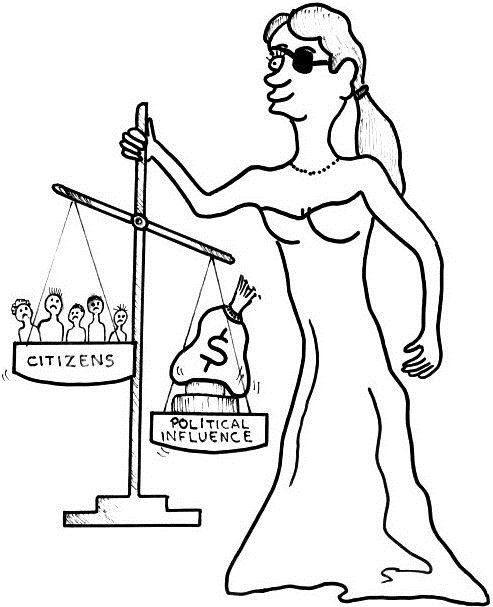
“Justice” is most commonly thought of in terms of courts of law, epitomized by a blind goddess holding a scale – and often a sword. Thus justice can be seen – and is seen by many – as punishment for crime s or transgressions. The rule of law may be necessary for a civilized society, but legal decisions, even in country such as ours, are not always just: think of the death sentences overturned by new DNA evidence, of the cases right here in Texas where a person was convicted of a capital crime while their court-appointed attorney dozed through the trial. Justice is, perhaps, in the eye of the beholder.

In the field of medical ethics, justice is one of the four key principles, but probably the least discussed. We often hear student groups discuss the relative implications of “non-maleficence” (do no wrong) and “autonomy”, as, for instance, when a person wishes a costly intervention that physicians believe will not help and may hurt (the fourth is "beneficence", do the right thing). But “justice” refers to the concept that people with the same conditions should have the same treatments available.  What, then, is “social justice”?

Also known as “distributive justice”, the term social justice was popularized by the philosopher John Rawls in the 1970s, although obviously the concept has been in existence, in one form or another, for centuries. In “A Theory of Justice”, Rawls writes:
“All social primary goods – liberty and opportunity, income and wealth, and the bases of self-respect – are to be distributed equally unless an unequal distribution of any or all of these goods is to the advantage of the least favored.”[1]
While this seems pretty expansive, as it says “distributed equally”, the inclusion of the phrase “to the advantage of the least favored” suggests that things are not completely equal because there are people who are least favored. For example, even in a much more equal society, some people may be suffering from physical or mental challenges that require them to utilize more resources. From a medical perspective, we have to consider whether  people who advocate for the disabled, or the expenditure of large amounts of money for the diagnosis and / or treatment for those who are close to them may see it as their individual “right”, but do not necessarily support other people having the same rights.

A somewhat earlier authority, Franklin Roosevelt, said that "The test of our progress is not whether we add more to the abundance of those who have much; it is whether we provide enough to those who have too little." This does not suggest that everything be divided equally, but makes a different moral claim: that what we do as a society (and it is fine to read “government”) should be to help those who need the help most rather than those who need it the least. Often in history, including today, that concept is rejected by many. In any case it is clear that, today in US, we do not have a system of social justice such as that described by either Rawls or Roosevelt; rather We have a system in which the most privileged exert great influence, and (mostly seem to) use it to increase their privilege. More modern discussions of social justice and medicine can be found in the many writings of Paul Farmer, including Pathologies of Power and Partner to the Poor: A Paul Farmer reader, and in the online journal Social Medicine, published by the Department of Family and Social Medicine at Montefiore Medical Center/Albert Einstein College of Medicine.

What are human rights? The most authoritative modern definition is that of the UN Universal Declaration of Human rights, passed in 1948. Article 25 states that:
“Everyone has the right to a standard of living adequate for the health and well-being of himself and of his family, including food, clothing, housing and medical care and necessary social services, and the right to security in the event of unemployment, sickness, disability, widowhood, old age or other lack of livelihood in circumstances beyond his control.

According to the UN Association of Canada (UNAC), while “originally the Universal Declaration was conceived as a statement of objectives to be pursued by Governments, and therefore it is not part of binding international law…. it is still a potent instrument used to apply moral and diplomatic pressure on states that violate the Declaration’s principles…. in 1968, the United Nations International Conference on Human Rights agreed that the Declaration ‘constitutes an obligation for the members of the international community to protect and preserve the rights of its citizenry.’”

So, then, how is social justice related to health, health care, and medicine? In 1978, the World Health Organization issued the “Declaration of Alma-Ata” (now called Almaty, it was then but is no longer the capital of Kazakhstan which was then but is no longer part of the Soviet Union!). It defined “health” as ““...a state of complete physical, mental and social wellbeing, and not merely the absence of disease or infirmity…” and asserted that it “… is a fundamental human right...” This has been an important cornerstone statement for the development of health care and primary care for the last 40+ years. Primary Health Care, which was also defined at Alma-Ata, is integrally tied to the definition of health:
Primary health care is essential health care based on practical, scientifically sound and socially acceptable methods and technology made universally accessible to individuals and families in the community through their full participation and at a cost that the community and country can afford to maintain at every stage of their development in the spirit of self-reliance and self-determination”
Note here that health care is not limited to medical care, and that it is to be “universally” accessible. This statement makes an effort here to account for the different economic ability of different countries. I once heard a presentation on the Mexican health care system, which seems structured to provide universally accessible care, but does not always achieve this goal.  I concluded that in Mexico, they have the desire to provide universal access, but not the resources, while in the US we have the resources but not the desire. Under a social justice framework, this is far less defensible.

In 1848, the Prussian government sent a young physician named Rudolf Virchow to investigate an outbreak of typhus in the coal-mining region of Upper Silesia. His conclusion, that the social and economic situation of the residents was the main cause, is one of the first clear discussions of the social determinants of health; though he is famous for advancing the Cell Theory and his name is attached to dozens of medical eponyms (Virchow’s node, Virchow cells, Virchow’s autopsy, etc.), he may be best known as the “Father of Social Medicine”. In his report he observes that:
“The physicians are the natural advocates of the poor, and social problems fall to a large extent within their jurisdiction,” and that
“Medicine has imperceptibly led us into the social field and placed us in a position of confronting directly the great problems of our time.”

Of course, today we see much less typhus, but we still see much disease that results from social conditions. And typhus itself is not completely gone. In the 1983 Gregory Nava film El Norte”, one of the lead characters, after finally reaching Los Angeles at the end of a long and grueling journey from Guatemala, dies of typhus contracted when she was crawling through sewers. Would she have gotten typhus if she had not been crawling through sewers? Unlikely. The “medical” question of “why” she got typhus would be that she was bitten by a rat-flea carrying Rickettsia typhae. But we must ask the next question, “where was she that she got bitten by a rat-flea?” and in discovering that it was in a sewer we must ask “why was she crawling through a sewer?” Finally, our question must be “what is wrong with a situation in which a person crawling through a sewer infested with rats, fleas, and Rickettsia typhae is better than the alternative?

{to be continued}


[1] Rawls J. A Theory of Justice. Belknap Press. Cambridge MA. 1971. P. 303.

Total Pageviews